Showing posts with label Festive Dish. Show all posts
Showing posts with label Festive Dish. Show all posts
Wednesday, 10 September 2014
Curry Leaves Chutney
Kadi patta or curry leaves commonly used as seasoning, this leaf adds a special flavor to every dish it is added to. Curry leaves are Packed with carbohydrates, fiber, calcium, phosphorous, iron, magnesium, copper, minerals and vitamins like nicotinic acid and vitamin C, vitamin A, vitamin B, vitamin E, antioxidants, plant sterols, amino acids, glycosides and flavonoids, curry leaves help your heart function better, fights infections and can enliven your hair and skin with vitality.
So by using this curry leaf we can prepare chutney to serve with breakfast dishes like Idli, Dosa, Pesarattu, Upma, Vada and Pongal. Apart from curry leaves which is the main ingredient, fresh coconut is also added and this is also a no onion and no garlic recipe.

Ingredients for Curry leaves chutney :
2tsp oil
1/2 tsp mustered seeds
3 to 4 stems Curry leaves
3 to 4 Green chillies
1/2cup grated fresh coconut
Small marble size Tamarind
Salt as per taste
1tsp gud or as per taste
1 pinch Hing
To prepare Curry leaves chutney :
1. Place a kadai on stove, put oil, mustered seeds. Once they start splutter add curry leaves, green chillies, and hing and fry for 2 to 3 min.
2. In a mixi jar add coconut, tamarind, salt, gud and the frayed curry leaves mixture and grind them to make chutney.
3. Temper it with mustered seeds and hing. Curry leaves Chutney is ready to serve with breakfat dishes like Idli, Dosa, Pesarattu, Upma, Vada and Pongal.
Tips / Notes :
- If u want u can add Rosted channa dal or fried Penuts to this chutney.
- I dont prefer to put tadka for any chutneyso that i can use it for more than a day by keeping it in refrigerator.
- This is also a no onion and no garlic recipe. So u can prepare this chutney during fasting.
Health Benefits of curry leaves :
1. Helps keep anaemia at bay
Tip: If you suffer from anaemia eat one date (khajoor) with two kadi patta leaves on and empty stomach every morning. This will not only help keep your iron levels up it will also help make you stronger and beat the symptoms of anaemia.
2. Protects your liver from damage
Tip: This remedy is very effective to strengthen the liver. Heat one spoon of homemade ghee, add the juice of a cup of kadi patta, some sugar and freshly powdered pepper. Remember to only heat this mixture a little as Kaempferol boils at very low temperatures and will evaporate if overheated.
3. Keeps your blood sugar levels under check – fights diabetes
Tip: To help keep your blood sugars under check you should ideally add kadi patta to all your meals. Alternatively having fresh leaves on an empty stomach everyday can also help.
4. Can help relieve the symptoms of diarrhoea
Tip: If you suffer from diarrhoea gently crush some kaddi patta into a ball (the size of a berry), and drink it with some butter milk. Do this twice to thrice a day for relief.
5. Reduces congestion in the chest and nose
Tip: To relieve congestion take a spoon of powdered curry leaves and add a spoon of honey to it. Make it a paste and eat this solution twice a day.
6. Is great to stop hair fall, premature greying of the hair and accelerate hair growth
Tip: To help strengthen your hair and fight dandruff, add the juice of kadi patta, to 100ml of coconut oil. Heat this oil till it turns blackish and apply it to your scalp regularly.
So try this recipe and write back to us…We love to hear from you.

Get this Related Posts Widget


Saturday, 30 August 2014
Undrallu_Gundugole_Undrallu Payasam_Pala Undrallu
I prepare this Gundugole payasam today for Ganesh Chaturthi, but one can make this on any festival. I learnt this recipe from my MIL during last year Ganesh Chaturthi festival. The process of making those tiny wheet balls is bit tedious but it is worth the effort. This is our family traditional naivedyam for Lord Ganesha on Ganesh Chaturthi. But u can prepare any day this naivedyam to Lord Ganesha on coming 11 days.


1cup wheat flour
1cup Channa dal
1cup Gud / jaggery
1cup Milk
Water to boil Gundugole and Channa Dal
2 to 3 pinch salt
To prepare Gundugole payasam:
1. First make smooth consistency or chapati consistency dove using Wheat flour, salt and water.
2. Take an empty plate and apply oil on it.
3.Take some dough in your hand, and using your fingers make small balls as shown in picture (the smaller the balls, the better the taste. it all depends on your patience). If the dough keeps sticking to you hand, smear little oil to your fingers to continue making the balls. This is the most time consuming process but the end product makes you forget all the pain you have taken while making it.
4. After you finish making all the balls, transwer it to a container add water to it and place in pressure cooker. In another container add Channa dal and water place this too in pressure cooker and cover it with lid. Cook them for two wishals.
5. Once the pressure drops open the cooker. Place a vessel on stove and pore the cooked Gundugole and Channa dal with water. To this add Gud / Jaggery, once the water starts boil add boiled milk and cook for 2 min and switch off the stove. Or when ever u are serving add boiled milk and serve.
6. Taste it at this point of time and adjust the thickness and sweetness of payasam by adding more milk or Gud / Jaggery to suit your taste buds. Do not boil for long as the mixture might curdle up sometimes.
Tips / Notes :
- Jaggery can be replaced with sugar in this recipe.
- If you do not have time to make those tiny wheat balls, u can prepare them one day before and sun dry it and store it in a box. When ever u are preparing this recipe u can use this dried Gundogole to fasten your cooking process on festive days.
- If you do not have time to make those tiny wheat balls, you can use a sev maker(slightly big holes) to press them into long cylinders. You do not need to steam them, you can press them directly into the milk-water mixture and boil it until they float and then add jaggery and boil for some time.
Health Benefits of Wheat:
1. Controls Obesity (especially in women)
2. Improves body metabolism
3. Prevents Type 2 Diabetes
4. Reduces Chronic Inflammation
5. Prevents Gallstones
So try this recipe and write back to us…We love to hear from you.
Get this Related Posts Widget
Friday, 22 August 2014
Sabudana / Sago Upma
There are a variety of dishes made from Sabudana / Sago like the Sabudana payasa, Sabudana Khichdi, Sabudana vade, Sabudana Upma and many more. Sabudana is full of starch or carbohydrates and is great for a quick boost of energy, and hence often served in India for breaking fasts during religious festivals. So here comes the general recipe of Sabudana / Sago Upma.



Ingredients for Sabudana / Sago Upma :
1 cup Sabudana / Sago, soaked overnight
2 tbsp oil
1/2 tsp mustard
1/2 tsp cumin seeds
1 tsp split urad dal
1 tsp channa dal
1 small onion finely chopped
3 green chillies slit
curry leaves
1/2 tsp turmeric powder
1 tbsp lemon juice
salt to taste
To prepare Sabudana / Sago Upma :
- Soak the Sabudana / Sago overnight or 3 hr before u cook.
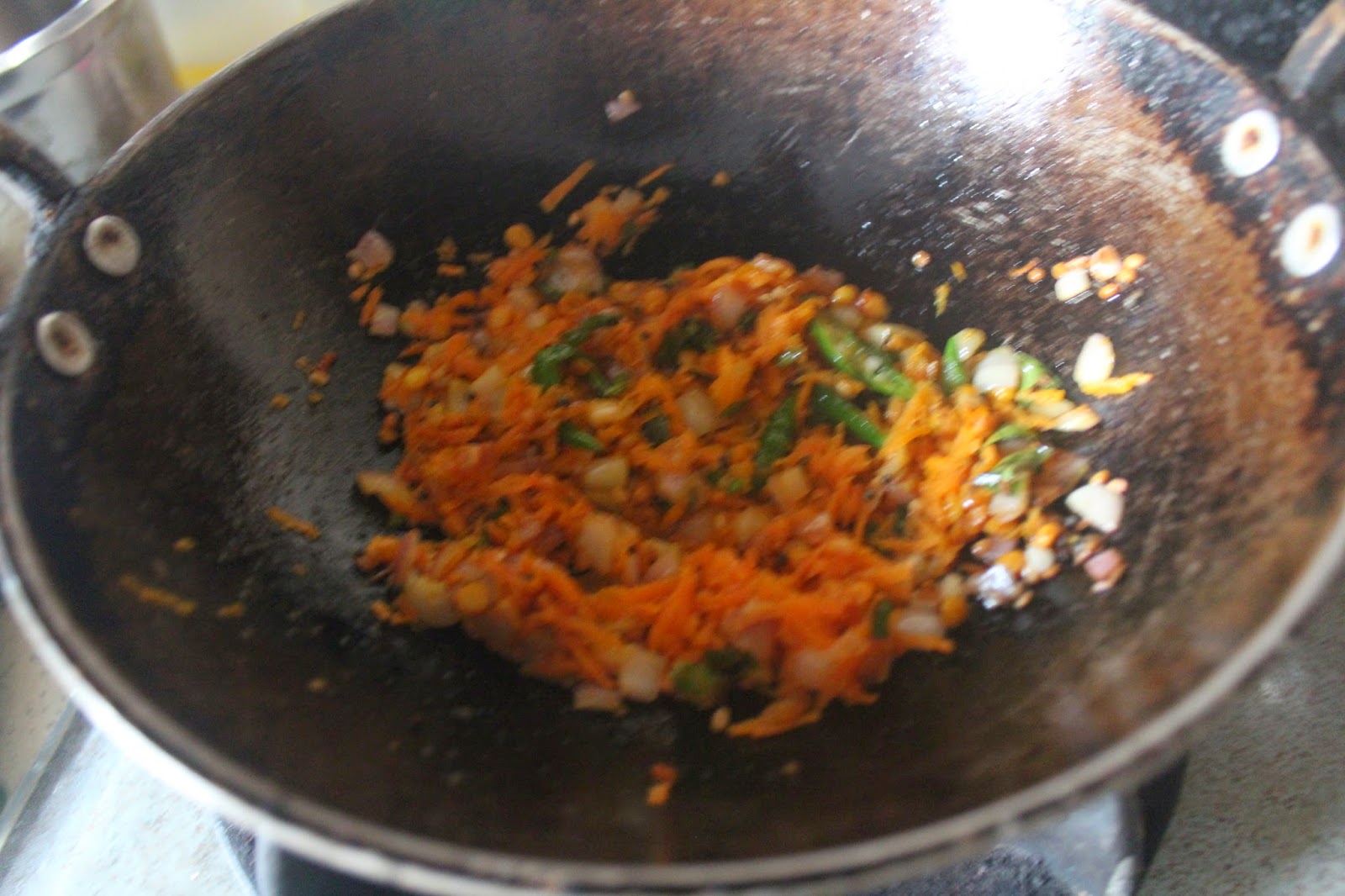
- Heat the oil in a pan over medium heat. Add mustard seeds, cumin seeds once mustard seeds start splutter add the urad dal and channa dal. When the dals turn brown add the onions, curry leaves and slit green chillies. Saute adding a little bit of salt and the turmeric powder until the onions turn soft and translucent. Add grated carrot and saute for 2 min.
- Add the completely drained Sabudana / Sago to this mixture and saute until the Sabudana / Sago pearls turn translucent and are cooked completely.
- Sprinkle the lemon juice and cook until the juice is completely absorbed. Check for seasoning.
Tips / Notes:
- U can add favorite vegetables to make Vegetables Sabudana / Sago Upma.
- U can add fried peanut for this recipe.
- Adjust the green chillies and salt quantity as per your requirement.
- To prepare Sabudana / Sago Tomato Upma, add 2 chopped tomatoes and saute until soft and all the moisture from the tomatoes is cooked out when the onions turn soft and translucent.
- U can prepare the same recipe without using Onion for fasting recipe.
Health Benefits of Sabudana / Sago :
- Sabudana / Sago is extremely low in fat but also low in protein. As it's just starch, other than the carbohydrates, nutrition-wise, sabudana / Sago does not contain any minerals or vitamins and has very low amounts of calcium, iron, and fiber. However, you can make up for this by using other ingredients with it, such as milk for making sabudana / sago kheer/payasam/a thin porridge or vegetables and peanuts for making sabudana khichdi.
- Sabudana / Sago powder can be used as a thickening agent in gravy dishes, and sago flour can be used to make flat-breads. Sabudana / Sago can be used while preparing vadas and can prepare pappadums using Sabudana / Sago
- Sabudana / Sago is full of starch or carbohydrates and is great for a quick boost of energy, and hence often served in India for breaking fasts during religious festivals.
- Boiled Sabudana / Sago porridge is also great when you're sick because it gives you quick energy and is easy to digest. According to Indian medicine, sago and rice have a cooling effect on the system, hence Sabudana / Sago thin porridge is given if you have excess bile (caused by excess body heat).
So try this recipe and write back to us…We love to hear from you.
Get this Related Posts Widget
Friday, 11 July 2014
Masala Vada / Ambode / Dal Vada / Fried Channa Dal Patties
Today I’m sharing one of my favorite recipe from my native state Karnataka. It is called as "Masal Vade" or simply spicy Fried Channa Dal patties / Dal vada. It’s one of street food in Karnataka and now famous all over India. It is one of the spicy snack prefer to prepared when it comes to festivals or festive occasions in Karnataka. Masala Vada is basically lentil based hot fried snack. Soaked Channa Dal is ground to rough paste with few spices and deep fried to get golden brown fritters. Make this vada to treat your evening with hot cup of coffee or tea.


Ingredients for Masala Vada :
To grind:
1 Glass split Bengal gram / Channa Dal
2-3 tbsp grated Coconut
4-5 Green chillies
Salt to taste
Make Garam masala powderg :
2 cloves
2 cinamon stiks small
1 cardamom
1 leaf of Star anise
Others :
2 med Onions finely chopped
Curry leaves finely chopped
1 tsp Ginger Garlic Paste
2-3 tbsp Rice flour
Oil to deep fry
To prepare Masala Vada :
To grind batter:
1. Soak Channa Dal for 3-4 hours. Drain the excess water from the dal and keep aside.
2. In a mixer, grind ¾ quantity of soaked Channa Dal, grated coconut, green chillies and salt to a coarse paste without adding water.
3. To this paste, add the remaining soaked lentils and just ‘pulse‘ the mixer 2 to 3 times. Make sure you should be able to see a few whole lentils as is. That is the texture we want for a crispy ‘Masal Vade’.
4. Transfer it into a wide bowl. Add chopped onions, curry leaves, Rice flour, Ginger Garlic Paste and Garam msala powder. Mix well. Adjust salt n spice level.
5. Make lime-sized ball of the mixture and lay these balls on a lightly greased plate / foil. Before droping it to oil pat them onto the greased palm of your left hand and shape them as a disc.
To make vadas / patties:
1. Place oil in a kadai / frying pan on medium flame.
2. Check the readiness of the oil, drop a small ball of dough (say around the size of the lemon seed). If the dough ball raises above the oil in a couple of seconds, the oil is hot enough to drop in the patties, gently slide the discs into the oil. Do not overcrowd them.
3. Cook it on a medium heat until golden brown on both the sides.
4. Drain it on a paper towel & repeat the procedure with the remaining dough balls.
5. Crunchy Masala Vade’ is ready to serve. Serve it hot with tea/coffee.
Tips / Note :
- You can add 1-2 tbsp of extra rice flour to the coarse dal mix if the dal mix just turned little watery / if u are having a tough time in giving them desired shape / they are breaking in oil
- While patting vadas, you can either do it as full thin disc or little fat ones. Difference is that the thinner discs would be full crispy and fat one would be crispy and crunchy outside and little soft inside.
The Masala Vadas can be prepared with many variations ...
- U can prepare Masala Vada by adding chopped dill leaves and coriander leaves to the mixture to get different flavour.
- U can prepare Masala Vada by adding pudina or methi leaves or any other herbs of your choice.
- U can prepare Masala Vada by adding some veggies like carrot or capsicum etc.
- U can prepare fasting occasions Masala Vada by omitting onion and Ginger Garlic Paste. They till taste good.
- U can use red chillies instead of grean chillies.
So try this recipe and write back to us…We love to hear from you.
Get this Related Posts Widget
Thursday, 26 June 2014
Ragi murukku or Ragi chakali
Ragi or Finger Millet is a very nutritious grain and has been used in many parts of


Ingredients for Ragi murukku or Ragi chakali :
2 cups Ragi Flour
1 cup Rice Flour
1/2 cup Putani / Rosted gram / Pottukadalai Flour
3 tsp Butter or Ghee
2 tbsp White Till Seeds
1/2 tsp ajwan seeds
1 tsp Red Chilli Powder
2 tsp Salt or as per taste
Oil for deep frying
To prepare Ragi murukku or Ragi chakali :
1. Put 1/4 cup Putani / Rosted gram / Pottukadalai in a mixie and powder it finely.
2. In a vessel put Ragi Flour, Rice flour, Putani / Rosted gram / Pottukadalai Flour, red chilli powder, salt, white till seeds, ajwan seeds and melted butter or ghee. Mix it well. Then add warm water little by little and make a soft dough.
3. Heat oil in a Kadai, Once the oil is hot enough (check by putting a little dough into the oil, it has to come up immediately), take small quantity of dough and put it in the Murukku Press / chakli press with “one stars” plate and squeeze it in circular motion directly to the hot oil. Allow to fry for one or two minutes and then turn it gently, so that it will not break in the oil. Fry till it becomes crispy.
4. Since the colour of the Murukku is dark, you cannot check it by seeding the colour whether it is fried or not. Hence fry it till the sizzling sound of the hot oil reduced to minimum.
5. Repeat the same procedure with the remaining dough.
6. With the same dough U can make Kodubale, Heart shape too.
7. Once the chaklis have cooled completely, store it in an airtight container.
Enjoy this yummy healthy Ragi murukku or Ragi chakali crunchy snack with tea, coffee, or on its own.
So try this recipe and write back to us…We love to hear from you.
Get this Related Posts Widget
Thursday, 12 June 2014
Tastey and Healthy Masala Kheer my 100th post!!
This Masala Kheer is filled with lots of nutritious values because of Nuts and Milk.
Its prepared with Indian vermicelli that is dry roasted / roasted in Ghee to a golden color, slowly simmered in milk and sugar, flavored with aromatic cardamom and garnished with toasted nuts. Simple to prepare, quick, comforting and delicious with a heavenly aroma! Its one of the South Indian Traditional sweets too.


Ingredients for Tasty Masala Kheer :
1/2 cup - Seviya (Vermicelli)
1/4 cup or less than that sugar
1 cup Full cream Milk
3 cup water
4 Green cardamom (powder)
2 tbsp Chiranji
2 tbsp Almonds
2 tbsp Cashios
2 tbsp Pistachios
2 tbsp Raisins
1 tbsp Desi Ghee/ Clarified butter
To prepare Tastey Masala Kheer :
1. Dry roast the Seviya (Vermicelli) and boil it in a pan by adding little olive oil, oil does not allow the Seviya (Vermicelli) to stick.
2. Add Desi Ghee/ Clarified butter in the hot pan, and add the nuts and sauté them till slightly colored.
3. In a bowl add Milk and Water then bring it to rolling boil then add boiled Seviya (Vermicelli), sugar and cook for 4 to 5 min.
4. When you see the milk is boiled and the vermicelli is soft. Add the fried nuts and cardamom powder and switch off the heat immediately.
5. Serve it hot or chill both taste great.
Tips / Notes :
- U can increase or decrease Seviya (Vermicelli), milk, water and sugar quantity as per u'r requirement. U can prepare this Masala Kheer by just adding milk.
- No need to rost if u use rosted Seviya (Vermicelli). This will fasten the cooking process.
- U can prepare simple Kheer by omitting Chiranji, Almonds and Pistachios.
- U can add any dry fruits of your choice including dates. But when u use dates add sugar by considering the sweetness of the dates.
- U can boil Seviya (Vermicelli) in milk directly to fasten the cooking process.
According to the National Dairy Council, Milk is filled with nine essential nutrients that benefit our health
Calcium: Builds healthy bones and teeth; maintains bone mass
Protein: Serves as a source of energy; builds/repairs muscle tissue
Potassium: Helps maintain a healthy blood pressure
Phosphorus: Helps strengthen bones and generate energy
Vitamin D: Helps maintain bones
Vitamin B12: Maintains healthy red blood cells and nerve tissue
Vitamin A: Maintains the immune system; helps maintain normal vision and skin
Riboflavin (B2): Converts food into energy
Niacin: Metabolizes sugars and fatty acid
Health benefits of Nuts :
Nuts are one of the best plant sources of protein. They are rich in fiber, phytonutrients and antioxidants such as Vitamin E and selenium. Nuts are also high in plant sterols and fat - but mostly mono unsaturated and polyunsaturated fats (omega 3 - the good fats) which have all been shown to lower LDL cholesterol.
Get this Related Posts Widget
Sunday, 1 June 2014
Beaten Rice / Avalakki / Atukula / Poha Sweet Pongal
As every one know pongal is the festive dish in south

Beaten Rice / Avalakki / Atukula / Poha are available in three different types:
1.Fine Flakes
2.Medium Flakes
3.Thick Flakes
So for this dish Thin Flakes is the one which goes so perfect.
Ingredients for Beaten Rice / Avalakki / Atukula / Poha Sweet Pongal:
1 cup - Thin beaten rice / Avalakki / Atukula / poha
3/4 cup - Jaggery (Bella / Gud )
2 tbsp - Ghee
1 tbsp - Cardamom Powder
1 tbsp each Cashew nuts, dry grapes
1/4 cup - water
Pistachio - for decoration (Optional)
To prepare Beaten Rice / Avalakki / Atukula / Poha Sweet Pongal:
1. Soak the beaten rice for some time to soften. Drain the water completely and keep it aside.
2. Roast the Cashew nuts, dry grapes using a tbsp of Ghee.
3. In a pan drop in the jaggery along with water. Let the jaggery dissolve and start boiling.
4. Leave them to boil ,till you get the string consistency.
5. Now add Cardamom powder and Rice / Avalakki / Atukula / Poha , mix them well. Cook them for 3 mins.
6. Add the roasted cashews, dry grapes and a table spoon of Ghee mix well.
7. Decorate with Pistachio and serve hot.
Get this Related Posts Widget
Friday, 30 May 2014
Ragi Vada / Ragi Vadalu
Ragi, also known as finger millet is a dark brown/red colour cereal. Being low in calories and rich in nutrition, it’s a wonderful food for all. 20 grams serving of ragi provides 66kcal of energy. Packed with calcium, iron, amino acids and anti-oxidants, ragi is truly a natural wonder. I learnt this recipe from Maavoorivanta program. Thanks to MAA tv for telecasting such wonderful dishes.....

Ingredients for Ragi Vada / Ragi Vadalu :
1 Cup - Ragi flour
1 cup - channa dal
1/2 cup - urad dal
4 to 5 - chopped Green chillies
3 - med Onions Finely chopped
1 stem - Curry leaves
1/4 cup - Coriander Leaves
1 to 1 1/2 tsp - Coriander seeds
Salt as per taste
Oil for deep frying
To prepare Ragi Vada / Ragi Vadalu :
1. Wash and Soak channa dal, urad dal for atleast 2 hours and make a coarse paste by adding 4 to 5 green chillies in wet grinder or mixi then add Ragi flour to this.
2. Finely chop Onions, Curry leaves, Coriander Leaves, Green chillies.
3. In a vessel, Combine all the ingredients and 2 tsp oil and mix well by adding required amount of water to make vada batter consistency. Don't add much water.
4. Heat enough oil in a deep frying vessel and take a small dough in hand and flatten it slowly with your fingers and drop it slowly in the oil. Don't overcrowd the vessel. Fry till it becomes crispy.
5. Drain excess oil in a paper towel and repeat the same steps for the next batch. Serve hot with tea/coffee.
Tips / Notes:
· If you have any Left Over Veggies like Carrot Beans, Peas, you can include them also here to increase the nutritious values.
· Apply some oil on your palm so that you can flatten the vada easily.
Get this Related Posts Widget
Subscribe to:
Posts (Atom)